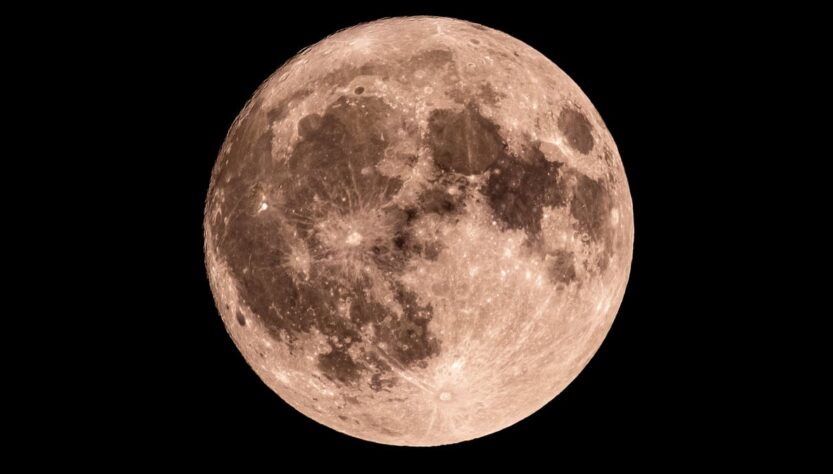
The Moon is almost fully out of view, and if you were hoping to do some Moon gazing tonight, you’re out of luck. As we approach the New Moon, there’s not a lot we can spot on its surface since only a tiny sliver is lit by the Sun.
What is today’s Moon phase?
As of Sunday, March 15, the Moon phase is Waning Crescent. According to NASA’s Daily Moon Guide, 16% of the Moon will be lit up tonight.
Viewing opportunities of the Moon’s surface are slim tonight. Without visual aids, you’re out of luck fully. However, if you have binoculars or a telescope, there’s a chance you’ll spot the Grimaldi Basin.
When is the next Full Moon?
In North America, the next Full Moon is predicted to take place on April 1.
What are Moon phases?
According to NASA, the Moon takes roughly 29.5 days to orbit Earth, passing through eight distinct phases along the way. Although we always see the same side of the Moon, the amount illuminated by the Sun shifts as it moves, which is why it can appear full, half-lit, or just a thin sliver at different times in the cycle. These shifting appearances are known as the lunar phases, and there are eight altogether:
New Moon – The Moon is between Earth and the sun, so the side we see is dark (in other words, it’s invisible to the eye).
Mashable Light Speed
Waxing Crescent – A small sliver of light appears on the right side (Northern Hemisphere).
First Quarter – Half of the Moon is lit on the right side. It looks like a half-Moon.
Waxing Gibbous – More than half is lit up, but it’s not quite full yet.
Full Moon – The whole face of the Moon is illuminated and fully visible.
Waning Gibbous – The Moon starts losing light on the right side. (Northern Hemisphere)
Third Quarter (or Last Quarter) – Another half-Moon, but now the left side is lit.
Waning Crescent – A thin sliver of light remains on the left side before going dark again.
PakarPBN
A Private Blog Network (PBN) is a collection of websites that are controlled by a single individual or organization and used primarily to build backlinks to a “money site” in order to influence its ranking in search engines such as Google. The core idea behind a PBN is based on the importance of backlinks in Google’s ranking algorithm. Since Google views backlinks as signals of authority and trust, some website owners attempt to artificially create these signals through a controlled network of sites.
In a typical PBN setup, the owner acquires expired or aged domains that already have existing authority, backlinks, and history. These domains are rebuilt with new content and hosted separately, often using different IP addresses, hosting providers, themes, and ownership details to make them appear unrelated. Within the content published on these sites, links are strategically placed that point to the main website the owner wants to rank higher. By doing this, the owner attempts to pass link equity (also known as “link juice”) from the PBN sites to the target website.
The purpose of a PBN is to give the impression that the target website is naturally earning links from multiple independent sources. If done effectively, this can temporarily improve keyword rankings, increase organic visibility, and drive more traffic from search results.